Table of contents
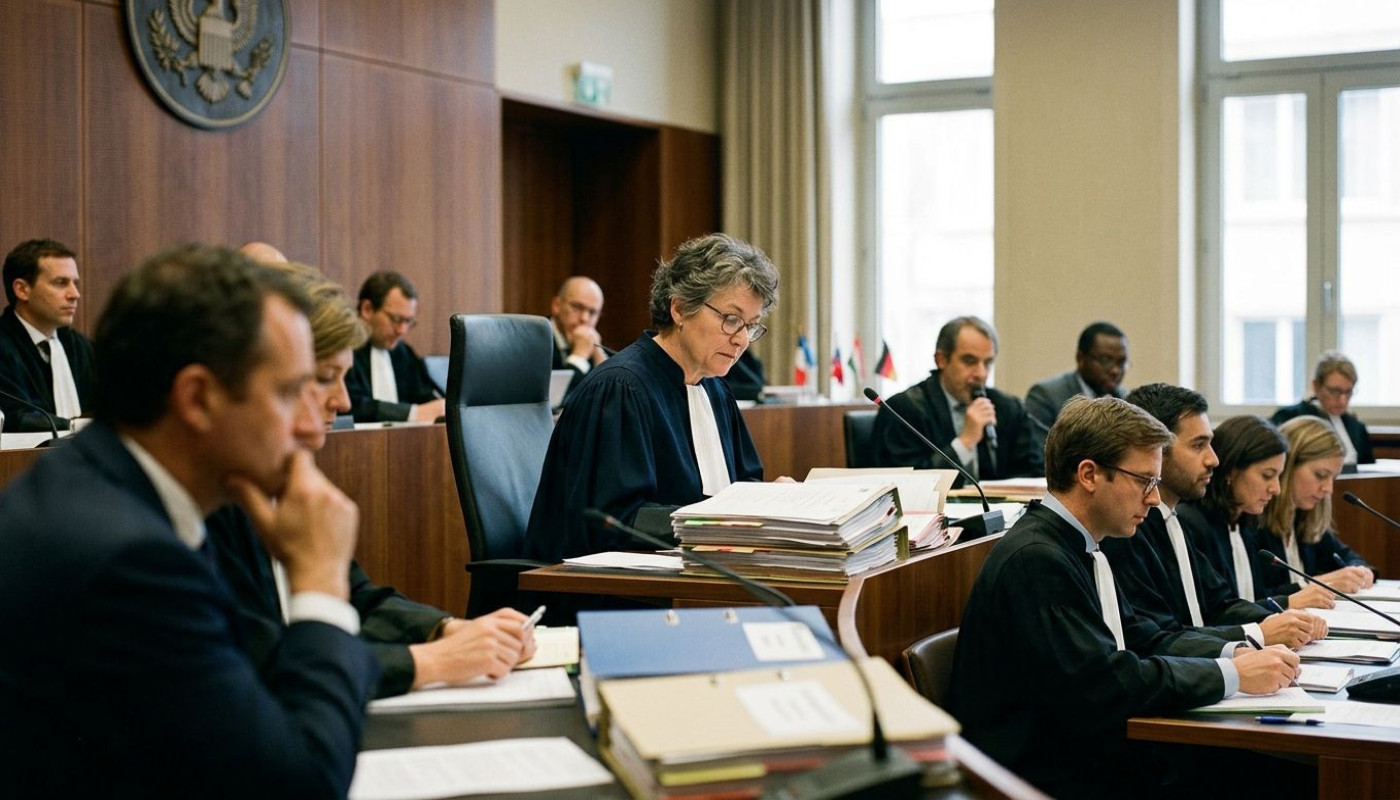
War crimes, cyber fraud, transnational trafficking, and political violence rarely stop at borders, yet the courtroom where suspects are tried is still, most often, a national one. From Europe’s investigations into Syria-era atrocities to Southeast Asia’s growing caseload of cross-border scams, prosecutors are testing the limits of domestic systems built for local crime. The question is no longer whether global criminality will reach national courts, but whether procedure, resources, and cooperation mechanisms can keep pace without compromising fairness and legality.
When global crimes land in local courtrooms
It often begins with a name on a passenger manifest, a phone seized at an airport, or a mutual legal assistance request that finally arrives after months of diplomatic back-and-forth. National courts are increasingly asked to deal with cases whose evidence sits in multiple jurisdictions, whose victims and witnesses speak several languages, and whose alleged conduct may have taken place thousands of kilometres away. In Europe, prosecutors have leaned on “universal jurisdiction” or related domestic provisions to investigate torture and war crimes committed abroad, a trend tracked by specialist monitors, including the European Center for Constitutional and Human Rights and the Global Justice Center, which document a steady rise in such filings since the mid-2010s. Meanwhile, cyber-enabled fraud and money-laundering cases routinely involve servers, crypto wallets, and banking rails spread across continents, forcing judges to make decisions on digital evidence and foreign investigative steps they did not supervise.
The friction shows up quickly in procedure. Domestic criminal codes were designed around nearby crime scenes and accessible witnesses, yet transnational cases depend on video testimony, translated records, and evidence gathered by foreign police under different legal standards. Even where international cooperation exists, it moves slowly: the UN Office on Drugs and Crime has long warned that mutual legal assistance can be delayed by incompatible systems, limited staffing, and narrow treaty coverage, and practitioners describe requests that take many months, sometimes longer, particularly when they involve financial data or covert techniques. That lag is not just administrative; it shapes bail decisions, pre-trial detention length, and ultimately the defendant’s right to be tried within a reasonable time, a cornerstone standard in many constitutional systems and in international human rights law.
Evidence, translation, and the clock
Global cases are won or lost on proof, and proof gets messy when it travels. A chain of custody that looks straightforward in a single city can become fragile when devices cross borders, when forensic imaging is repeated by multiple agencies, and when disclosure obligations differ. Digital evidence adds another layer: metadata, cloud logs, and encrypted chats may be held by providers subject to foreign laws, and the resulting datasets can be enormous, which raises practical questions for courts that still operate on paper-heavy workflows. In the United States, for example, the CLOUD Act framework was created to streamline access to data held abroad under certain conditions, while the European Union’s e-evidence initiative has pursued faster cross-border production orders, yet both have faced debate over safeguards, oversight, and conflicts of law.
Language is not a footnote; it is a trial issue. Interpreting services, translation accuracy, and the defendant’s ability to understand proceedings can become central to fairness, especially when technical material is involved. A mistranslated term in a wiretap transcript, or a poor rendering of a witness’s nuance, can distort intent, credibility, and context, and it can take weeks of expert review to identify. Courts also face the “clock problem”: complex cases require time, yet time increases the risk that witnesses disappear, memories fade, and defendants remain in limbo. The Council of Europe’s case-law on “reasonable time” has repeatedly stressed that complexity can justify longer proceedings, but it does not excuse systemic delay, and national judiciaries under budget pressure may struggle to provide the judges, clerks, and specialist staff that these files demand.
Extradition decisions set the whole case’s tone
Before a courtroom ever hears evidence, extradition fights can decide whether a prosecution is even possible, and they often expose the sharpest tension between sovereign power and individual rights. Extradition is not a mere handover; it is a legal process with its own evidentiary thresholds, treaty requirements, and human-rights constraints. Many jurisdictions apply versions of the “dual criminality” principle, meaning the alleged conduct must be a crime in both states, and some require assurances on issues such as the death penalty, prison conditions, or access to counsel. The European Court of Human Rights has, for decades, developed a strict line on removals where there is a real risk of torture or inhuman treatment, shaping how European states handle surrender requests, and similar scrutiny appears in constitutional litigation elsewhere.
In practice, extradition work demands a rare blend of criminal, international, and administrative law expertise, and the quality of lawyering can shape outcomes quickly, especially where deadlines are tight and detention is at stake. That is why specialised teams matter in jurisdictions that sit at the crossroads of travel and commerce. For readers trying to understand the mechanics in Thailand, where extradition questions can intersect with immigration holds, red notices, and treaty interpretation, the Thai Extradition team offers a window into how these cases are prepared and challenged in real life. The broader point is structural: when extradition decisions are rushed, under-resourced, or overly politicised, they can poison a prosecution from the start, whereas careful judicial review can strengthen legitimacy, protect rights, and make eventual trials more resilient to appeal.
Capacity gaps: judges, budgets, and political heat
Are national courts equipped? Some are, many are trying, and a significant number are still playing catch-up. The first gap is expertise. Global criminal cases increasingly require knowledge of international humanitarian law, sanctions regimes, corporate structures, and digital forensics, yet most judiciaries cannot train every judge to that level, and rotating assignments can dilute institutional memory. Several countries have responded by creating specialised war-crimes units or dedicating prosecutors and investigators to atrocity cases; Germany’s federal prosecutors, for example, have developed notable experience under its Code of Crimes against International Law, a framework that helped deliver landmark convictions related to Syria. But specialisation is expensive, and it can be politically sensitive when cases involve foreign officials, diaspora communities, or allegations that implicate allies.
The second gap is money, and money determines speed. Transnational cases require travel, secure storage for sensitive material, advanced forensic capacity, and witness protection, and they also require resilience against interference, including cyber threats to court infrastructure. Underfunded courts may face a blunt choice between prioritising domestic caseloads, which voters feel immediately, and devoting months to a single international file. Then comes the political heat: global cases can be framed as diplomacy by other means, prompting pressure on prosecutors and judges, and sometimes triggering disinformation campaigns against witnesses or civil-society groups. To withstand that, courts need clear rules for public communication, security protocols, and transparent reasoning in decisions, because legitimacy is not only about getting the verdict right; it is about convincing the public that the process was fair, rigorous, and insulated from external influence.
How national courts can keep up
There is no silver bullet, but the reforms that work tend to be practical, not rhetorical. Faster, more standardised cooperation channels matter, including properly staffed central authorities for mutual legal assistance, and clearer templates that reduce the back-and-forth that eats months. Digital evidence handling must be upgraded, with secure platforms for disclosure and with judicial guidance on authenticity, reliability, and proportionality, because ad hoc approaches invite inconsistency and appeals. Courts also need better support for victims and witnesses, particularly in cases involving sexual violence, trafficking, or atrocities, where trauma-informed procedures can improve testimony quality while reducing harm, and where protection measures may be necessary for families still living in fragile environments.
Finally, national systems need honest triage. Not every global crime can be prosecuted everywhere, and overreach can backfire, yet targeted cases can have outsized impact when they focus on those most responsible, when they are built on solid evidence, and when they coordinate with international mechanisms rather than compete with them. Domestic courts will remain the main stage for most prosecutions, so capacity building is not an optional add-on; it is the price of credibility in an era where criminal networks, and the harms they cause, are undeniably global.
What readers can do before a case moves
If you may face cross-border criminal exposure, budget first for specialised counsel and certified translation, then plan for travel restrictions and document requests that can arrive quickly. Ask early about treaty coverage, expected timelines, and whether bail or detention is likely. In extradition-risk situations, reserve funds for urgent filings and expert reports, and check whether legal aid or consular support is available.
On the same subject
Red Flags And Red Tape: Navigating Interpol In Search Of Safety
